
Cats (musical)
A sung-through musical about the Jellicle choice and rebirth.

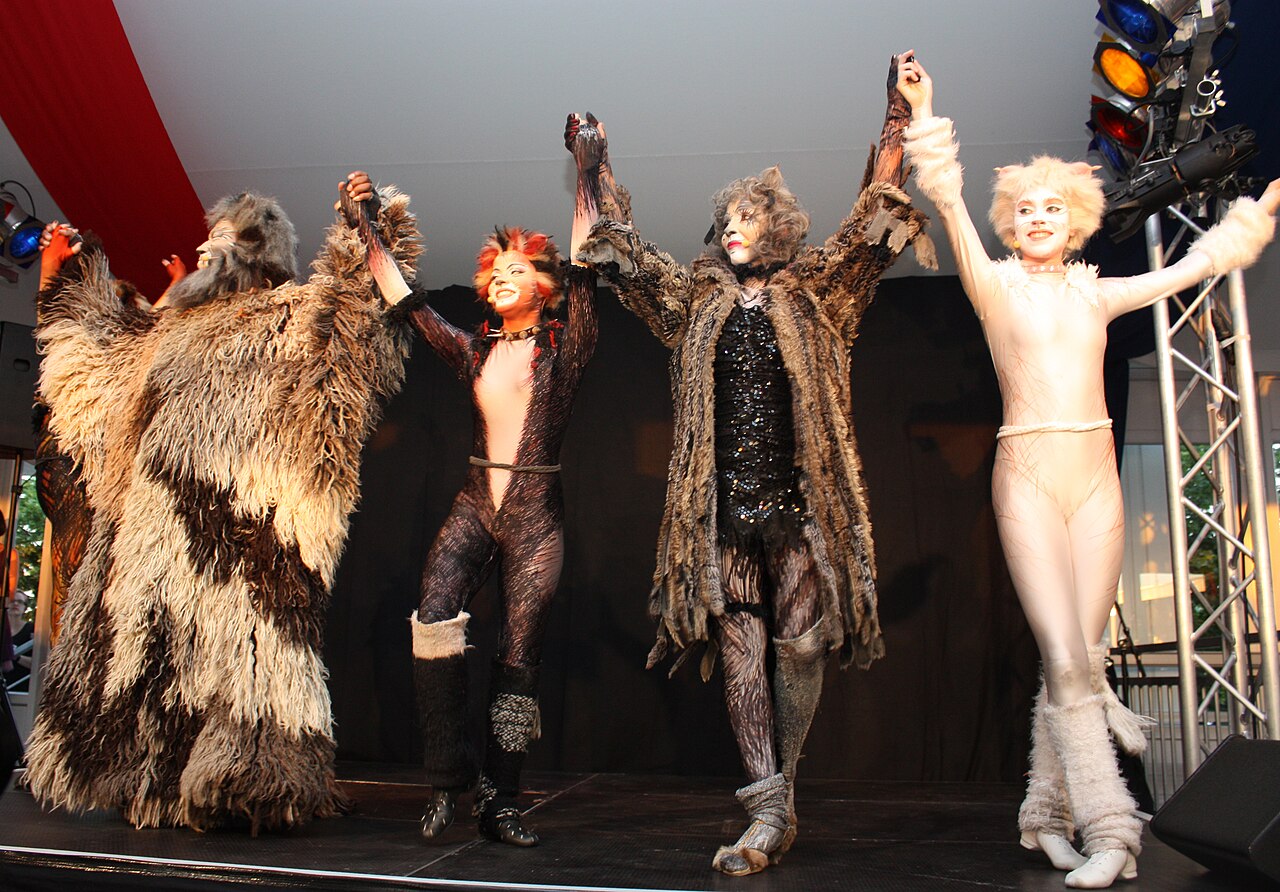
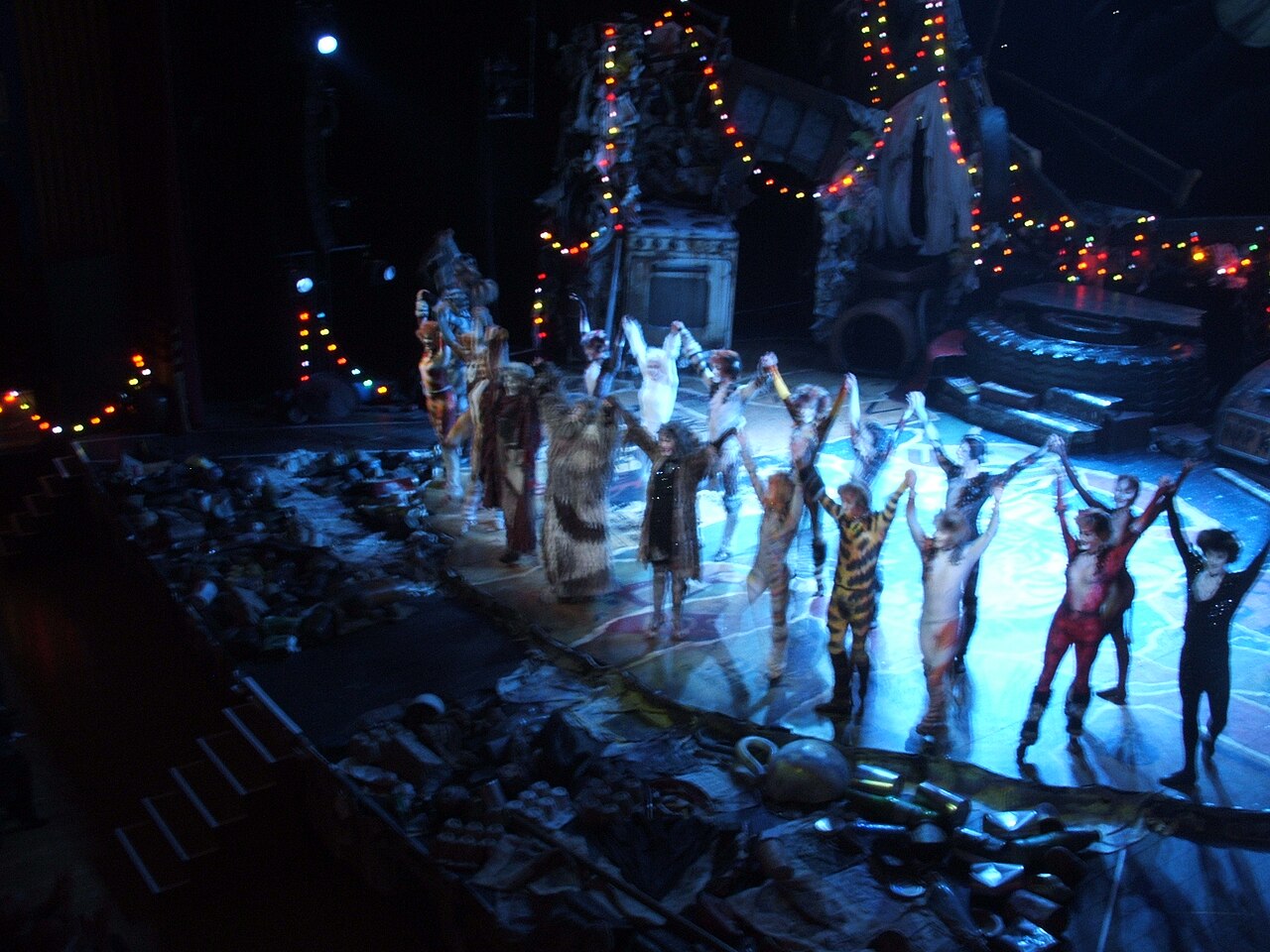
Quadratestadt Mannheim · CC BY-SA 2.0
Cats is a sung-through musical with music by Andrew Lloyd Webber, based on T. S. Eliot's Old Possum's Book of Practical Cats. It tells the story of a tribe of cats called the Jellicles and the night they make the 'Jellicle choice,' deciding which cat will ascend to the Heaviside Layer and come back to a new life. As of 2024, Cats is the eighth-longest-running Broadway show and the ninth-longest-running West End show.
- Music by
- Andrew Lloyd Webber
- Based on
- Old Possum's Book of Practical Cats by T. S. Eliot
- Notable awards
- Laurence Olivier Award for Best Musical, Tony Award for Best Musical
- Worldwide gross by 2012
- Often cited as over US$3.5 billion, though this figure is disputed and not definitively verified
Lore & Background
Producer Cameron Mackintosh recruited director Trevor Nunn and choreographer Gillian Lynne to turn the songs into a complete musical. Despite its unusual premise that deterred investors initially, Cats turned out to be an unprecedented commercial success.
Reader's Guide
Cats started the megamusical phenomenon, establishing a global market for musical theatre and directing the industry's focus to big-budget blockbusters, as well as family- and tourist-friendly shows. Its profound but polarising influence reshaped the aesthetic, technology, and marketing of the medium. It has been revived in the West End twice and on Broadway twice, and translated into multiple languages. Cats was adapted into a direct-to-video film in 1998 and a feature film in 2019.
Did You Know?
- The most famous song 'Memory' features music by Andrew Lloyd Webber and lyrics primarily adapted by director Trevor Nunn from Eliot's poem 'Rhapsody on a Windy Night', also incorporating a line from Eliot's 'Preludes'.
- The musical's worldwide gross is often cited as having reached over US$3.5 billion by 2012, though this figure is disputed and not definitively verified.
From Poems to Stage — The Creative Genesis
Andrew Lloyd Webber first began setting T. S. The compositions were initially performed privately for friends with no grander ambitions. He approached producer Cameron Mackintosh to explore possibilities. A pivotal moment came when Eliot's widow and literary executor, Valerie, attended and brought unpublished cat-themed poems. One of these, Grizabella the Glamour Cat — originally rejected from the book for being too sad for children — struck Lloyd Webber with such dramatic force that he immediately decided the project warranted a full musical. He sought the support of a collaborator to weave a dramatic whole from the verse, and the show was co-produced by Mackintosh and Brian Brolly of the Really Useful Group.
Staging the Unstaged — Production and Critical Reception
Producer Cameron Mackintosh recruited director Trevor Nunn and choreographer Gillian Lynne to transform the song cycle into a complete sung-through musical. The result was a show that musicologists William Everett and Paul Laird described as a hybrid of revue and concept-musical traditions, with Eliot's poems, music, and dance taking centre stage at the expense of a traditional narrative arc. Despite this uneven critical reception, the show swept major honours, winning Best Musical at both the Laurence Olivier and Tony Awards. The unusual premise of a tribe of cats called the Jellicles choosing one among them to ascend to the Heaviside Layer and be reborn initially deterred investors, yet the production defied scepticism.
A Global Phenomenon — Commercial Success and Longevity
What began as a personal songwriting exercise became one of the most commercially successful theatrical properties in history. By 2012, Cats had generated a worldwide gross of US$3.5 billion, an unprecedented figure for a stage production. The show's reach extended far beyond these two markets. It has been translated into multiple languages and staged around the world numerous times. Cats has also been revived in the West End twice and on Broadway twice, demonstrating sustained audience appetite decades after its original openings. As of 2024, it remains the fifth-longest-running show on Broadway and the eighth-longest in the West End.
Reshaping the Industry — Legacy and Cultural Impact
Cats is widely credited with igniting the megamusical phenomenon, fundamentally redirecting the commercial trajectory of musical theatre. The production established a genuinely global market for the art form and shifted the industry's focus toward big-budget blockbusters and family- and tourist-friendly spectacles. Its influence extended beyond box-office numbers, reshaping the aesthetic sensibilities, technological approaches, and marketing strategies of the medium as a whole. The musical's impact was profound yet polarising, leaving a complex legacy that continues to be debated among critics and practitioners. The show's cultural footprint has also extended into other media: it was adapted into a direct-to-video film in 1998 and a feature film in 2019.
Gallery

Frequently Asked Questions
What is Cats (musical) about?
It is a fully sung-through musical that follows a tribe of cats called the Jellicles on the single night each year they gather to make the 'Jellicle choice.' One cat is selected to ascend to the Heaviside Layer and return as a brand-new being. The narrative is built from T. S. Eliot's poem collection Old Possum's Book of Practical Cats.
Who composed the music for Cats?
Andrew Lloyd Webber wrote the entire score, turning Eliot's poetry into a show with no spoken dialogue at all. He is also the composer behind Phantom of the Opera and Jesus Christ Superstar.
What is the Jellicle Ball?
The Jellicle Ball is the annual ceremony at which the tribe votes on which cat will receive the gift of a second life. The chosen cat is carried to the Heaviside Layer, a spiritual afterlife, and comes back renewed. It functions as the emotional and narrative climax of the musical.
How long has Cats been running on Broadway?
As of 2024, Cats is the eighth-longest-running show in Broadway history, having opened in 1982 and kept a continuous run for over four decades. It similarly ranks ninth in the West End for longevity.
What is the Heaviside Layer in Cats?
The Heaviside Layer is the afterlife realm where the selected Jellicle cat is reborn before returning to the living world as a new cat. It embodies the musical's core theme of transformation, forgiveness, and the possibility of starting over.
More in Opera And Musical Theatre 1-19
Spotted an error? Know more?
This is a living reference — every entry is fact-audited, and reader corrections feed straight into our audit queue. Suggest an edit · See this site's audit record