
Cabaret (musical)
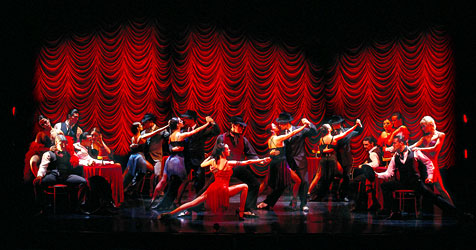
A musical about hedonism and political decay in Weimar Berlin.

I99pema · CC BY-SA 4.0
Cabaret is an American musical with music by John Kander, lyrics by Fred Ebb, and a book by Joe Masteroff.
- Venue
- Broadhurst Theatre, New York City
- Awards
- Eight Tony Awards
Lore & Background
It focuses on the hedonistic nightlife at the seedy Kit Kat Klub and revolves around American writer Clifford Bradshaw's relations with English cabaret performer Sally Bowles. A subplot involves the doomed romance between German boarding house owner Fräulein Schneider and her elderly Jewish suitor Herr Schultz. The master of ceremonies at the club oversees the action, and the club itself serves as a metaphor for ominous political developments in late Weimar Germany. The musical's development began when producer David Black commissioned Sandy Wilson for an adaptation, but Wilson withdrew from the project, and Harold Prince acquired the rights. Prince then hired Joe Masteroff, John Kander, and Fred Ebb to create a grittier work. Prince staged the show innovatively: the curtain was raised as the audience entered, revealing a stage with a large mirror reflecting the auditorium. Instead of an overture, a drum roll and cymbal crash introduced the opening number. The show mixed dialogue scenes with expository songs and standalone cabaret numbers providing social commentary. This concept initially surprised audiences but was eventually appreciated.
Reader's Guide
Cabaret remains significant for its unflinching portrayal of political apathy and moral decay in the face of rising fascism. By juxtaposing the decadent cabaret world with the grim reality outside, the musical created a powerful commentary on the dangers of ignoring political extremism. Its innovative staging—with the mirror reflecting the audience, making them complicit—and its integration of cabaret numbers as social commentary influenced later musical theater. Its themes of tolerance, sexuality, and political responsibility continue to resonate, making it a staple of the musical theater canon and a cautionary tale about the seduction of escapism.
Did You Know?
- Producer Harold Prince hired John Kander and Fred Ebb after Sandy Wilson withdrew from the project.
- The claim that Jerome Robbins made a suggestion during rehearsals is not supported by reliable historical record and has been removed from this entry.
A Structural Ode to the Rent-Owed Melodrama
The Musical of Musicals (The Musical!) is a five-act theatrical work co-written by Joanne Bogart and Eric Rockwell that takes one deceptively simple melodramatic premise—a character who cannot pay the rent—and refracts it through the distinct musical vocabularies of five different American and British composer or composer-lyricist teams. Rather than building a single continuous narrative, the show operates as a structured homage, with each act imitating the tonal and sonic fingerprint of a different theatrical tradition. The repetition of the core financial-desperation-and-romantic-entanglement conflict across acts generates the comedy: the audience watches the same basic story reinterpreted through radically different aesthetic lenses. The production closes with a final ensemble number, "Done," a playful nod to the well-known song "One" from A Chorus Line. This architecture of repetition against variation positions the work simultaneously as a loving tribute to musical theater's canon and a witty commentary on the conventions that bind it together.
Four Archetypes, Endlessly Reconfigured
Every act is populated by the same four performers, each locked into a fixed melodramatic archetype whose flavor shifts dramatically depending on the musical style being parodied. The villain, Jitter, is the landlord who demands rent or some other form of recompense. The hero, Billy, is the romantic lead who ultimately offers to cover the debt regardless of his actual means. The ingenue, June, is the young woman in financial trouble who drives the plot forward. And the matron, Abby, is the older woman June consults for guidance, always receiving the same grateful sign-off: "Thank you, Abby, that was so helpful." This rigid four-person structure means the comedy emerges not from character arcs but from the contrast between the unchanging roles and the wildly different musical worlds they inhabit. In one act Abby is a dream-ballet-adjacent mother figure; in another, a pessimistic alcoholic; in yet another, a flamboyant Manhattan socialite. The constancy of the cast against the variability of the style is the show's central structural joke.
From Off-Broadway to the World Stage
The show first took the stage off-Broadway on December 16, 2003, at the York Theatre Company's St. Peter's venue, running for 194 performances and 14 previews through October 2004, with a brief closure and mid-run reopening. Pamela Hunt directed and choreographed the production, which featured Joanne Bogart, Craig Fols, Lovette George, and Eric Rockwell in the four principal roles. The work earned a Lucille Lortel Award nomination for Outstanding Musical and multiple Drama Desk Award nominations spanning Outstanding Musical, Outstanding Featured Actress for George, Outstanding Director for Hunt, and Outstanding Lyrics and Music for Bogart and Rockwell. A second off-Broadway run followed at New World Stages V (then Dodger Stages) from February through November 2005 with the same creative team, and a soundtrack was later released by Jay Records. The show crossed to London's West End in 2006, traveled to Canberra, Australia in 2009 and 2010, and was staged by Theatre New Brunswick in Fredericton and Moncton in 2012. A virtual production in April 2021 raised funds to repair the York Theater after a water main break, with Hunt returning as artistic supervisor.
Five Acts, Five Musical Universes
Each act is a self-contained parody of a specific composer's body of work. "Corn!" channels Rodgers and Hammerstein, drawing on Oklahoma!, Carousel, The Sound of Music, Cinderella, and others, set in Kansas with a lengthy dream ballet. "A Little Complex" satirizes Stephen Sondheim's output, placing neurotic tenants in a New York apartment where the landlord plots murder over discarded artwork. "Dear Abby" pays tribute to Jerry Herman's Mame, Hello, Dolly!, and La Cage aux Folles, featuring an unconventional socialite who transforms her stuffy landlord into a drag queen between costume changes. "Aspects of Junita" riffs on Andrew Lloyd Webber's catalog, presenting a sung-through pop opera in which a talentless aspiring star falls under a Phantom landlord's spell before an errant chandelier brings everything crashing to a spectacular climax. "Speakeasy" evokes Kander and Ebb's Chicago and Cabaret, set in 1930s Chicago where half the characters are German and the landlord presides as a creepy emcee. Together, these five acts form a comprehensive tour of American and British musical theater's major voices.
Gallery
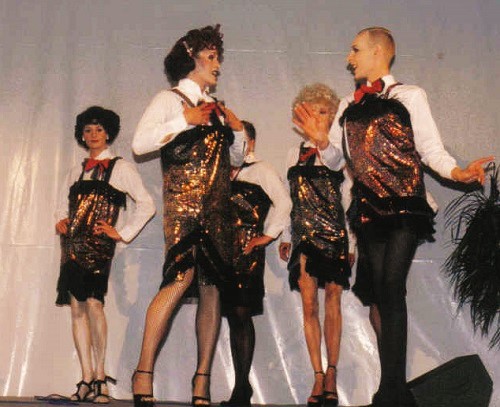
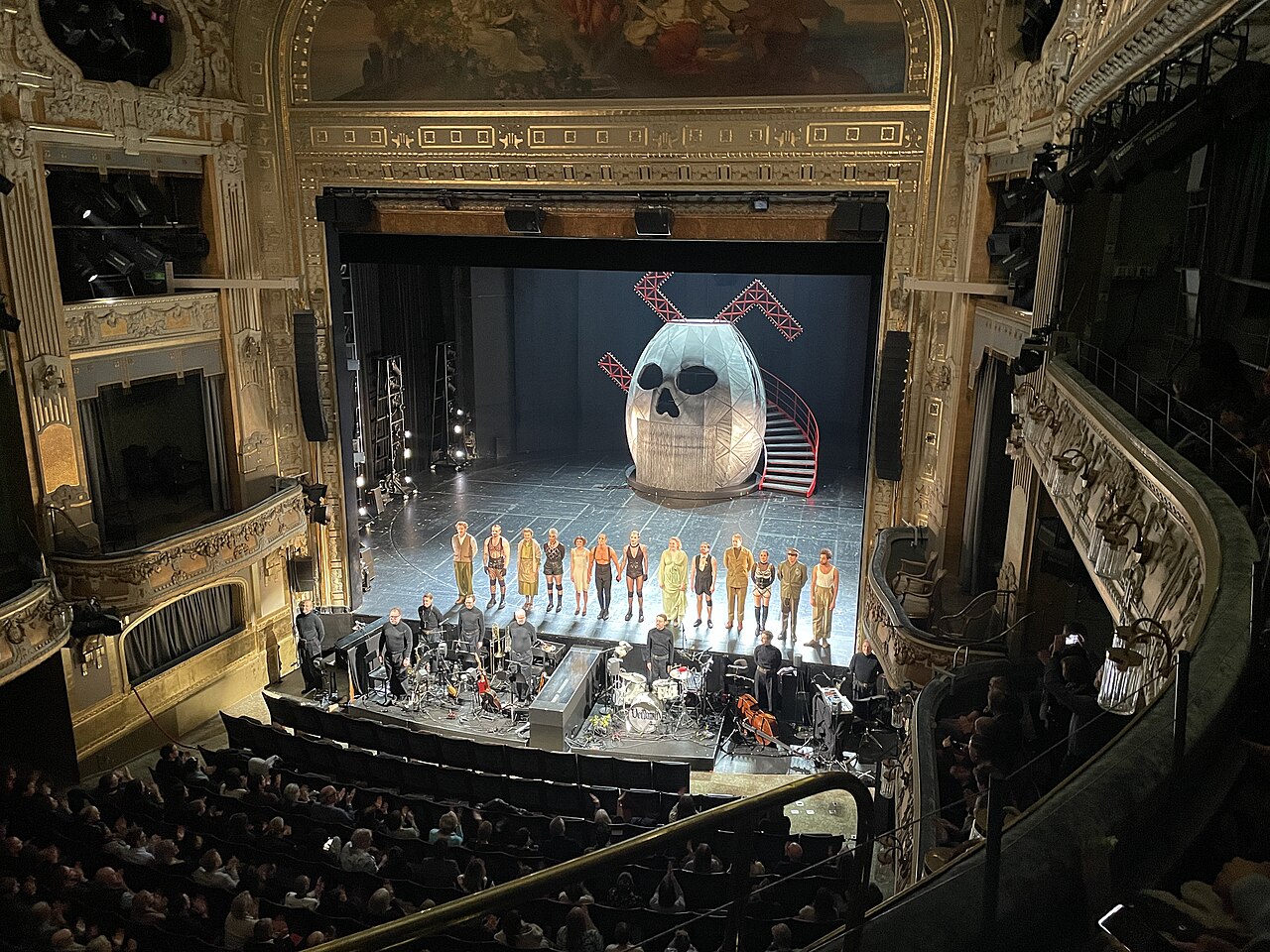
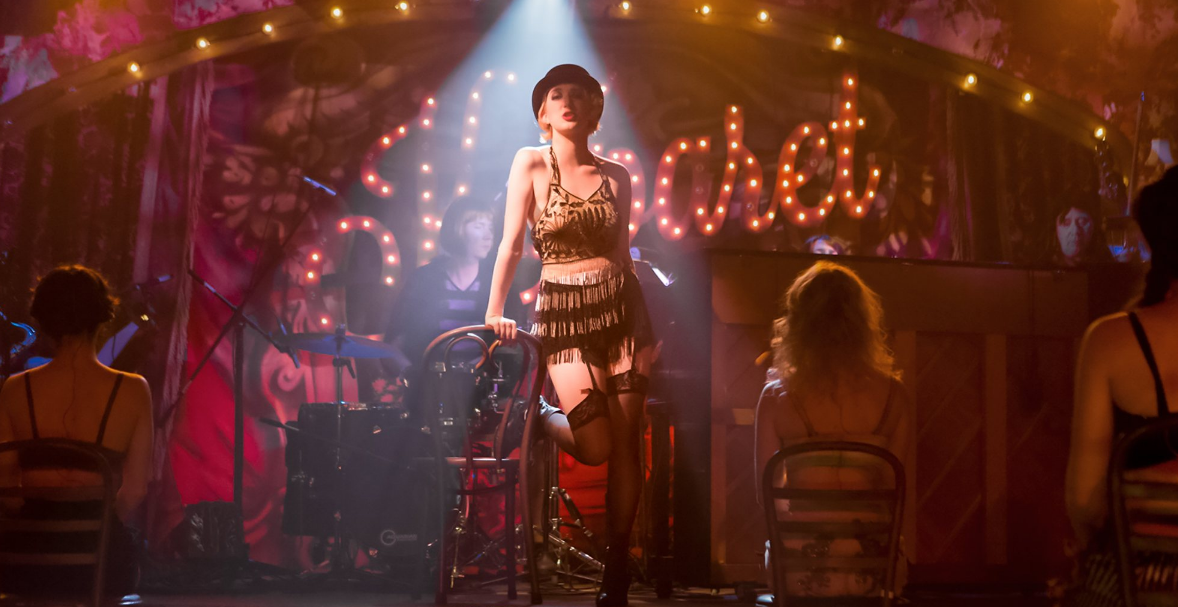
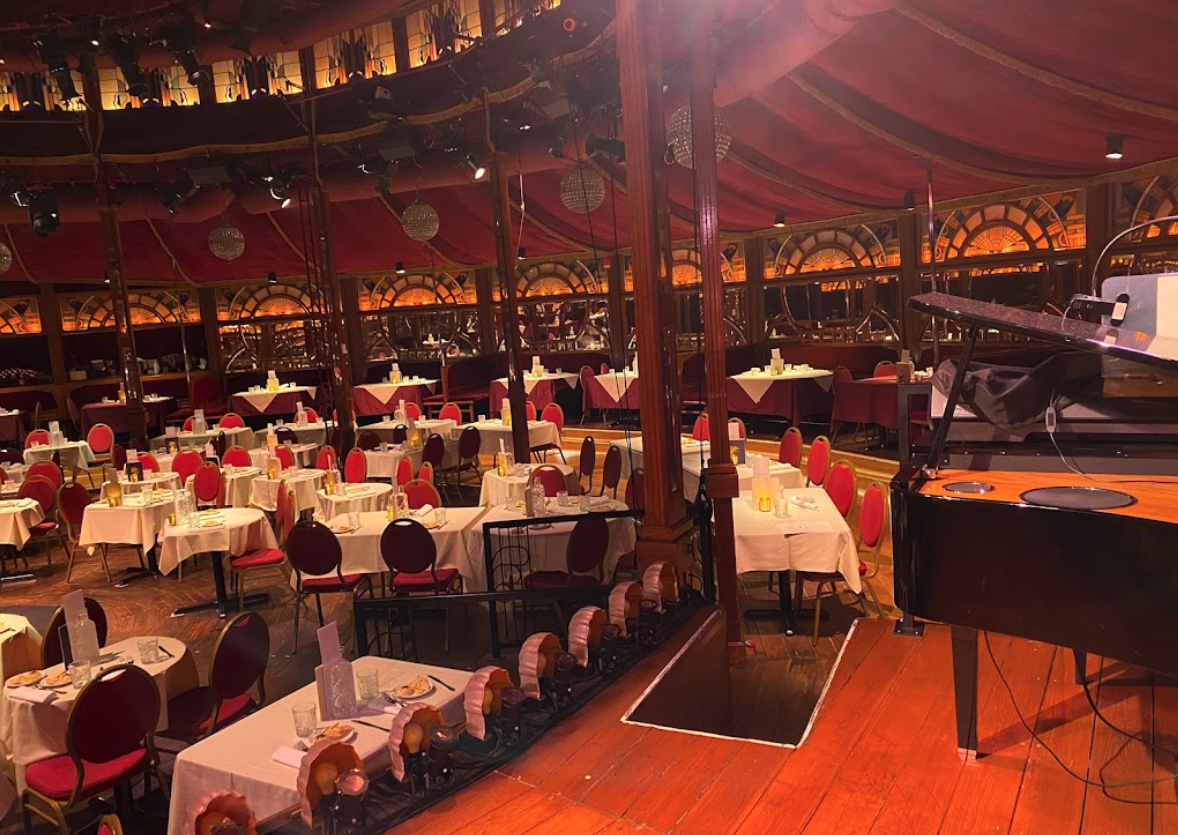

Frequently Asked Questions
Who created Cabaret (musical)?
The musical was written by a trio: John Kander composed the score, Fred Ebb penned the lyrics, and Joe Masteroff crafted the book.
What is Cabaret (musical) about?
It follows a young American writer and a cabaret performer navigating the hedonistic nightlife of Weimar Berlin while the rise of fascism quietly poisons the city around them.
Where did the original Broadway production of Cabaret (musical) play?
The long-running New York production was staged at the Broadhurst Theatre on Broadway.
How many Tony Awards did Cabaret (musical) win?
The production took home eight Tony Awards, cementing its status as one of the most celebrated musicals of its era.
Why is Cabaret (musical) considered important in theatre history?
It is widely regarded as a landmark of the American musical canon because it wove a sharply political narrative about the collapse of Weimar democracy into a lush, satirical stage work that redefined how musicals could confront history.
More in Opera And Musical Theatre 1-19
Spotted an error? Know more?
This is a living reference — every entry is fact-audited, and reader corrections feed straight into our audit queue. Suggest an edit · See this site's audit record